
Come one, come all to the virtual table! In this online age, virtual tabletops have boomed in popularity, revolutionizing play with tools such as dynamic lighting, built-in soundboards, and combat trackers. It has never been easier to find a game, and connect with other players around the world. But with technological ease comes technical difficulties. Come listen to experienced GMs and players discuss the advantages and disadvantages of virtual tabletops versus in-person play!
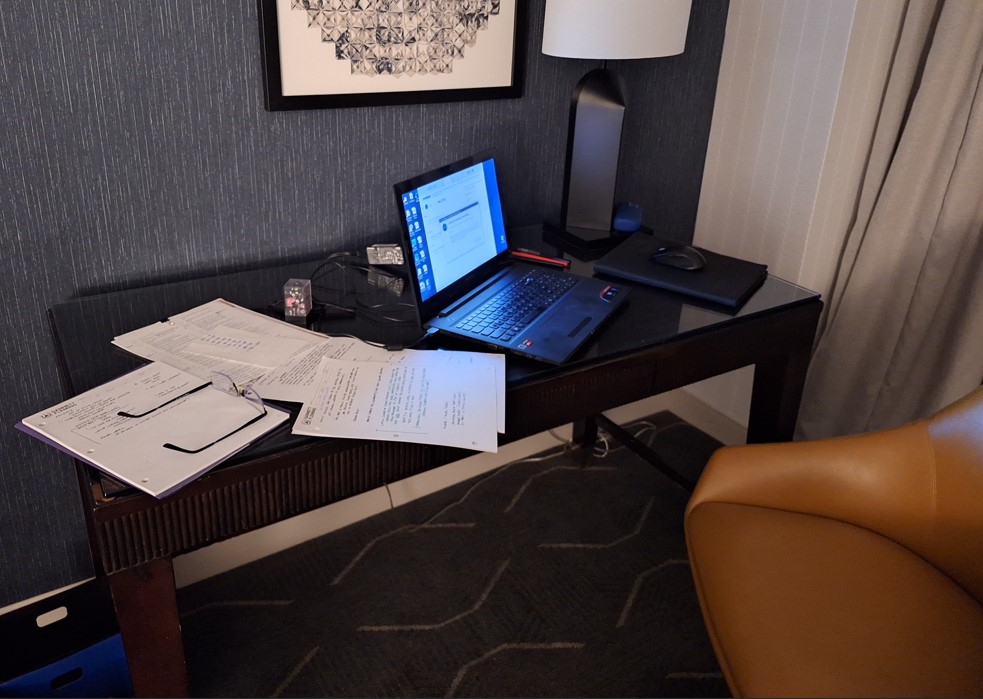
I picked this panel up late. I didn’t have a ton of time to prepare ahead of the convention for this one and ended up walking into the panel room with a blank sheet of paper and a handful of thoughts. Thankfully the moderator had things well in hand and brought some good questions. My fellow panelists also brought their perspective to things and there was a lot of information I was glad to hear, right along with what I could share of my own experience.
While I don’t have a prepared list as I did for the other panels, I am going to compile a few notes about what was said here. I believe this was the one panel of all those I was on that really needed to be virtual as well as in person. Sitting and chatting about websites and online resources just wasn’t the same without even a screen to share what we were talking about. Hopefully this one will pop up again next year and I’ll get another crack at it.
Notes:
An aspect I hadn’t considered until it came up in the panel. Access via hardware. What sort of computer and internet connection do you need? There are a lot of folks who take that sort of thing for granted these days, but not everyone has the same level of computer and internet. How you connect matters. If you’re looking to start a game up via the net, consider the requirements for the system you’re going to run!
How are you connecting? I was able to run my game from my laptop off hotel room wifi while I was at the convention. I happen to have a paid Zoom account and I use that for all my players. IF you’re unable to pay for a meeting service like Zoom or Teams, what else is there? At least one of the panelists used Discord to run their game. Private server, messaging capabilities, but issues with the audio connection some of the time.
Are you using some kind of map or going directly to theater of the mind? I am super visual, so I have my own Inkarnate account for map creation. This is yet another expense that some people might not be able to handle. That’s just for creation – where will the maps go? How will the players deal with their character sheets and the rules? There are lots of options out there. Roll20, Foundry or DnD beyond are just a starting point… but all have costs associated with them. Also, if they are the hosts, who owns the content? What happens to your character, your maps, your rule books if your subscription gets shut down?
One genuine upside to the virtual table is location. It’s virtual – so I can sit in my home office and play with people across the country or around the world. The biggest struggle there, as with any game group in history is the schedule. What time zone are you in? What time zone are they in? How do we make that work?
Our group has settled into a comfortable pattern of using PDF character sheets and looking at maps via Owlbear Rodeo. Again – Owlbear has a cost associated with it. As long as one person has access, the rest of the folks can be given a link and the game can go forward from there.
There are a growing and fast changing series of tools for gaming across the net out there. The biggest considerations revolve around the costs. Hardware, rules, connection platform and mapping software just to name a few. If you can figure those things out, then playing at a virtual table is definitely worth the effort!