I’ve had a couple of posts recently about being a fan and artwork. Turns out those things can come together. Fan Art.
I don’t usually work in other people’s worlds when it comes to writing or art. I’d rather not deal with all the mess that comes along with trying to get permission or paying for rights for use or any of that mess. If I’m making it up, it’s mine.
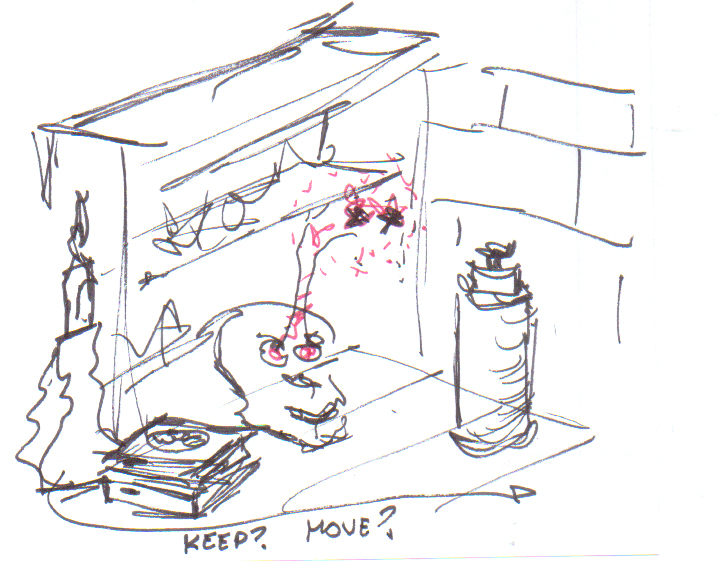
This time it’s different. There was a call put forward for a fan art contest for the Dresden Files. I’ve always created pictures in my mind when reading so this one was something that struck me as particularly “doable”. I had a concept that popped into my head, but no sketch book or anything else really handy (clearly an error in judgement on my part). I reached for whatever I could find and just made myself a note so I could recall what I had thought later.
Original Note
It’s not amazing art – it’s note taking. It’s getting the essence of what I was trying to remember so I could go back and get after it again later. It did what it needed to do.
I’ll share the entries I created after the contest is done. I don’t want to mess up whatever chance I might have by publishing something before it has had a chance to get into the judging.
I’d say ‘fingers crossed’ but it’s really hard to type that way!
When I put out my mini biography for
different publications part of that bio says, “author, artist, fan,
usually in that order”. There’s something about knocking together
words and attempting to tell a story that really works for me. I love
a good story. Thing is, my first love has always been creating art.
Art is by no means easy. Over the
course of my life I’ve heard a lot of people talk art down saying
things like, “my kid can splash paint around…” or “he just
crapped on canvas”. Art is subjective in the purest sense. Things
that I love, other people hate. Things I revile have been held up as
master works. It’s all still art. Some of it sells, some of it
languishes, some of it is created purely for the sake of making art –
never meant to be sold or reviewed but simply enjoyed by the creator
and those the creator chooses to share with.
I have attempted to create art for many years with varying levels of success. Some digital pieces live here on my web site (and should be updated). Some digital pieces go to the cover art for Watch The Skies (and many should be forgotten). Some pieces live in my sketch books and in my storage area only for me to reference. I am, on a good day, an amateur artist. On a good day. Most days I’m a savagely poor hack, an imitation of what an artist should be. I keep doing it because it was my first love, but for a very long time I have known the frustration of not being able to take the vision in my head and put it forward in a medium that conveys the right look or feel to others. It is frustrating, but I still take a swing at it regularly. You can’t get better if you don’t work at something.
In my professional life I mix the very
technical with the artistic on a daily basis. I interpret the designs
of napkin sketches and transform them into the reality of the built
environment. I use various computer programs to create what does not
exist and show it to others. It has taken more than two decades, but
I am finally reaching a point where I think the computer programs and
the knowledge I have of the built environment have reached a point
where I can actually create something truly artistic. I hope, after
much more practice to create something memorable.
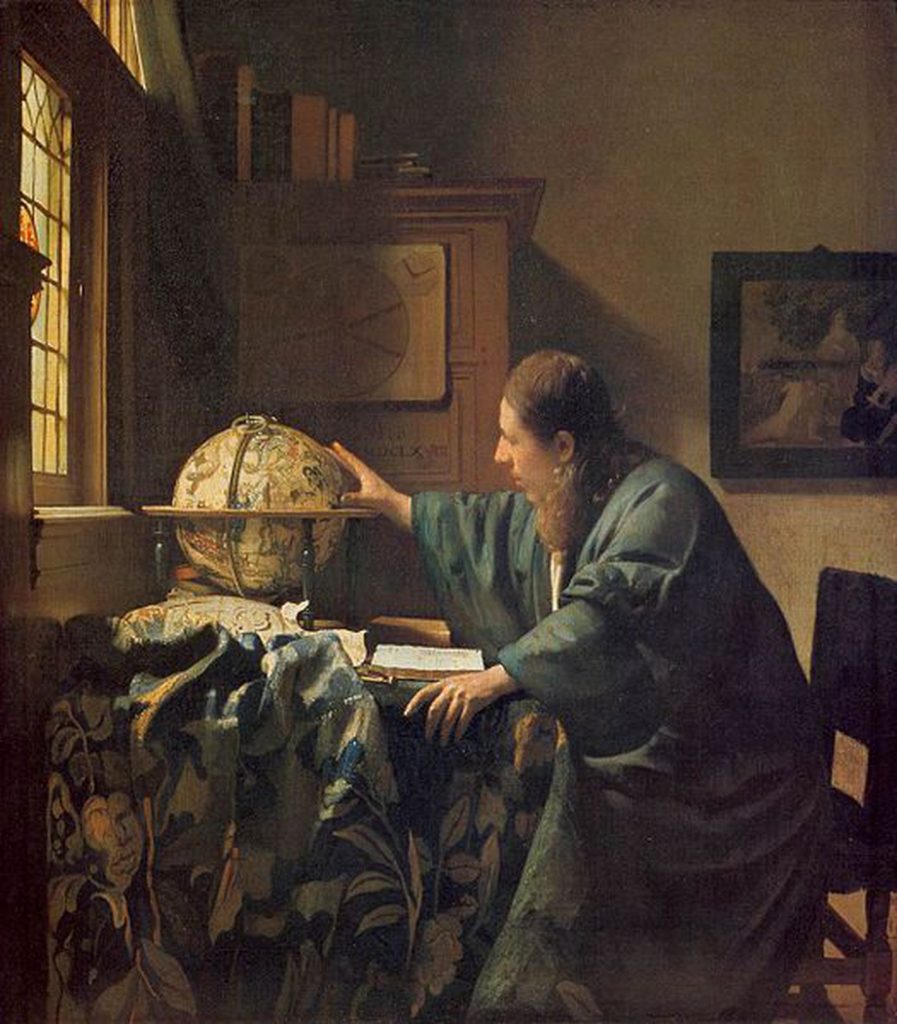
As it turns out I am not the only person to be interested in this combining of art and technology. I have been meaning to get around to viewing a film called ‘Tim’s Vermeer’ for quite a while. Now that I have had the opportunity to see the film I would highly recommend digging up a copy of this someplace and taking a look if you’re interested in art or technology at all. The subject of the film became obsessed (there is no other word for what he did) with the look and make up of Vermeer‘s paintings. He contended there was some kind of technological aid this most famous of painters used. In order to gather as much proof as he possibly could, he attempted to reconstruct the method for creating a painting he thought was how Vermeer worked. It’s fascinating because when we think of technology we tend to tie the concept specifically with the ultra modern. This experiment is all conducted using methods that would have been available when Vermeer was working – around the year 1650. I was amazed to see the result and the rediscovery of technological innovation after more than 350 years.
If you’re at all interested in seeing what I’m talking about, the trailer for the film is here. As is frequently the case I found inspiration in this study of art. I’m off to attempt to create more art.