Actions and Consequences

Given the title you’d think this was attached to John Wick, but it’s decidedly not.

My last panel of the weekend was about running a game that includes “that guy”. I was moved up to the moderator position for this one, so I had limited chat time, but did get to (try) to guide the conversation. I put ‘try’ in there because we had a really excellent panel of creative and sharp people. As we were sitting and chatting before the official panel started we were covering various topics in a startlingly inattentive way. Somebody said, “train of thought derailed… no survivors…” and that was immediately met with “Oh No! All those poor, theoretical thought people!”

Theoretical thought people sort of became an unofficial theme as we rolled into our discussions. It was a whole lot of fun and I was really happy to have such a great panel of folks to work with. Below are my panel notes. The fixes listed are mine alone. The rest of the panel had some great suggestions as well.
Panel description:

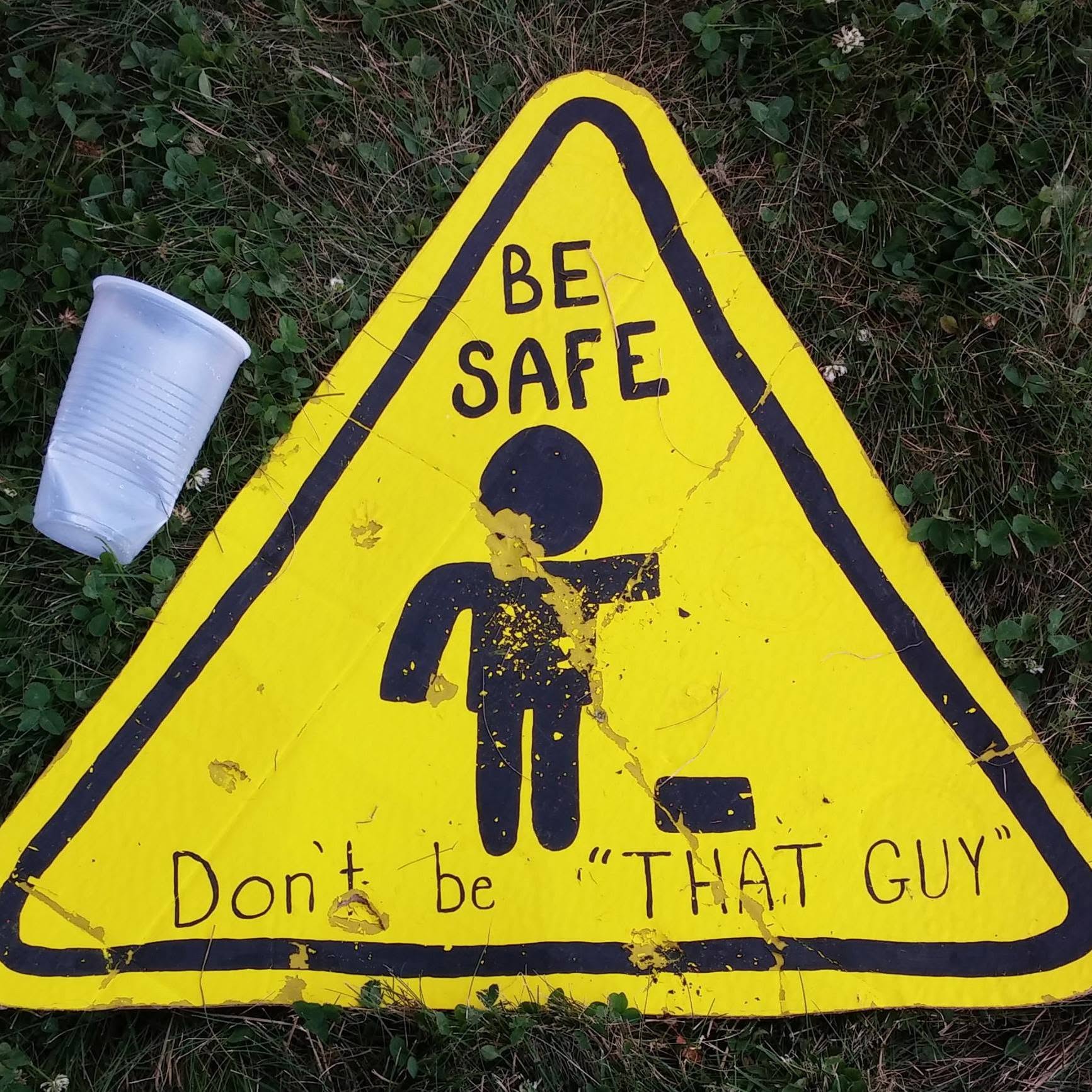
One of the biggest problems that can be encountered with running games at events is That Guy. Everyone has heard of a That Guy. They’re the Murder Hobo, the Horny Bard, the one player who doesn’t care about the story or progression or the rest of the party. Our team of Game Masters will share their stories, and discuss tactics to curtail these behaviors.

Loose Outline:

Introductions ~ include: are you currently running a game? Are you currently playing a game?

Definition – what is your definition of “that guy” (or girl – let’s not narrow it too far).

Connected to above – Are there specific types of or styles of “that guy”?

Do you believe in session zero? Will it stop “That Guy”?

Do you have, use or are familiar with player consent question lists? Should GMs use those?

What about personal connections? Does the DMs boyfriend always get special treatment?

Ask the audience for (short) specific examples and see how the panel would handle it?


Example types of bad players:

Rules lawyer(s) – Rules as written OR rules as DM says that’s how it works…
Fix – ask them to help you, and track all the rules (and changes) you make and use.

Instigator – Rogues stealing party treasure, fighting internally, “Leroy Jenkins”!

Fix – actions and consequences, set the tone to your own game, DON’T ROLL – make rulings

Spotlight Hog – player talks over everyone else, jumps onto doing the same action as others

Fix – sandwich compliment(s) around issue. Often just excited~

The Cheater – Faking rolls, “fixing” the amount of gold they have… etc.

Fix – Don’t tell them if they need to roll high or low

The Power Gamer – trying to be super powerful, stretching the rules, pushing limits. Hard to DM

Fix – Use them OR ask them what they’re goal is and then put the next steps on them.

Also – The bad guys learn… how will they grow the character if combat isn’t a challenge?

The Immersion breaker – pulling people out of the mood IF you’re hitting on all the wrong notes

Fix – land

The Meta-gamer – can’t make the separation between player and character knowledge

Fix – ask the player if they think they would know something

The Boss / Critic – who thinks they know it all and tell everyone else what to do or tell them it’s wrong

Fix – direct, call out the behavior

Flippant – Just not paying attention, constantly on the phone, don’t really seem to want to play

Fix – try to engage them a little, see how they respond

IF it doesn’t work, give them an option to leave (and talk it all out) {EPIC DEATH EXIT?}

Communication is key!

My personal house Rule #1: It’s just a game.

We’re here to have fun, and if we’re not having fun, then why are we doing it? Get out there, play games, have fun!
Dark Lording for Fun and Profit

This was my next to last panel at the convention this year. It had a solid moderator and I was able to chat with my fellow panelists about what it takes to create a really solid story antagonist and what that might look like. There were some excellent bits tossed around and I don’t remember many of them very clearly. These are the notes I was working from, so if you’re trying to create a lasting ‘bad guy’ for your game (or story even) hopefully you can find some inspiration.

Panel description:
Having an antagonist is great, but what takes them past the level of mustache-twirling villain, and into the realm of the Big Bad Evil Guy? Panelists will discuss how to build the structure of minions and influence for your BBEG to stand on, so the heroes have to climb in level to reach them before the final showdown.

My notes:

Antagonist is a better term than “Big Bad Evil Guy”. The best antagonists don’t see themselves as the bad guy. How scary was the operative from Serenity? Who did you hate more from the Harry Potter series, Voldemort or Delores Umbridge?

Be creative.Not everyone is a mastermind with 56 plot lines weaving in and out of their minds, but do any little bit you can. Take on something small if you feel like you don’t know where to start. Look at your character and create from there. What do you really know about? Slide some of that into your character, and use that as a starting point.

Crazy example – If you’re a hair stylist, allow your character to wear a hair style that you’d love to see, then leap off from there and make it a quirky part of that character – the character constantly tries to get others to color their hair or braid their beard or something. Those little bits of flavor make a very rich game. Then… grow that.
In the ‘Big City’ there’s a fashion explosion of magical hair styles. Hair stylist becomes the new, hot profession. This proliferates and generates lots of requests to learn at the top school.
Only this so called school is secretly backed by the mind flayer society. They’re creating these techniques to cause hair to fall out and skulls to soften so they don’t get hair in their teeth and their meals are easier to get to.
And they in turn get all the ‘product’ they use from a magical factory / distribution center where the true big boss is running the entire thing.

Your heroes can do the traditional ‘missing person’ quest to get into this OR they can get one of these hair styles. When their hair all falls out they can quest for new hair!

Work with what you know and use it.

Antagonists don’t just stop being ‘bad guys’ when the players aren’t around. Players leave and come back and things have changed. New guards in town, less favorable deals at the potion shop, any sort of thing that might hinder the quest, even just a little.

Example – in a game I run one smaller antagonist cut a deal with the players. The players left that area. When they returned they found the deal was in place, but the small antagonist was now the head of a bureaucratic structure (that he created using charm spells) that was doing tons of shady things, but with an entirely legit staff. His new position changed the leverage point for the players.

In the end, keep notes. Write down a handful of small things and circle back to them when they fit. You don’t have to be a mastermind, you just have to be mindful. Hopefully there are some game masters out there that get a little bump from this!

Knights of the Virtual Table

My first panel “at” the convention was a fully virtual panel. No physical presence at all. I’m glad we were able to present the panel again this year, and do it in this format. It wasn’t a bad panel, but my connection at the hotel was not fantastic. Maybe, if we keep rolling with the virtual format we’ll actually get to a place where we can have some pre-set questions and get some screen sharing time in.

The description:

Come one, come all to the virtual table! In this online age, virtual tabletops have boomed in popularity, revolutionizing play with tools such as dynamic lighting, built-in soundboards, and combat trackers. It has never been easier to find a game, and connect with other players around the world. But with technological ease comes technical difficulties. Come listen to experienced GMs and players discuss the advantages and disadvantages of virtual tabletops versus in-person play!

Panel: Jana S. Brown (mod), Swift Crescendo, Angela Yuriko Smith, ME!

My Notes:

I have been a player and game master for a long time. As happened with so many, when we weren’t able to get together in person in the bad old days, we went online. I just kept it going – it is simultaneously easier and more diverse than many of my previous games. We now post our live play games on my YouTube channel for all to view.

First – COST.

It’s important to understand that playing a virtual game automatically has a cost associated with it. That is a limiting factor right from the start. The simple fact that playing like this demands a computer/phone/tablet (depending) and an internet connection. This is a limit for some people. We’re already here, so we can move ahead with an understanding that your party can get there – but it’s important to remember that starting cost.

Where do you connect?

How do you play? Do you have cameras on and do theater of the mind OR are you audio only while navigating a map in a virtual environment? There are a number of places to play, with various costs associated.

Play Tabletop Games hosts a wide variety of games – with per session costs. There are some that are free, others that cost. I have seen a range from $10 – $50 per session from the top GM lists.

Roll20 – Free to use, subscription for more options (from $50/year to $150/year)

Foundry VTT – One-time $50 payment by the Dungeon Master required

Fantasy Grounds – Free to use, subscription or purchasable license required for DM only (requires a download – and that may change your ability to connect based on your computer)

Owlbear Rodeo – Free to use, paid subscription available ($40/annual or $80/annual)

https://new.tableplop.com/ – Free to use

Tale Spire – digital, graphical – looks like it’s 3D (cost $25 on Steam)

There are TONS of digital tools out there for anything you can imagine. Character sheets, random generators, random everything generators, map tools, audio tools, and a massive list of advice videos about which of those tools are the one you should totally use.

Here are some that I think are important:

Random Name generators – my party always wants to know names. Have a list handy OR grab a random generator.

My go to is Fantasy Name Generators

Maps. I am super visual, and I love using Inkarnate

Those were all the notes I had prepared. In the end the path wound its way hither and yon. If you’re really interested in hearing what my co-panelists had to say you can pop over to good ol’YouTube and check out the whole panel – it was virtual so they recorded it!

Remembering

I have been working on something for a while now. It’s taken a lot of effort, emotionally, to get it all done. I can’t say that it’s everything I imagined, but it’s worthy and it’s mine.

I’ve put together a tribute video for my wife. I’m going to continue to game. My group is happy to keep joining me and I’ll keep telling stories with them. It felt important to put together some small pieces so that her game is complete. I know that she left our sessions relatively early on, but her influence continued.

Head over to the channel to check it out if you’re so inclined:

Solo Game

Sometimes taking the time to play a game is just the sort of rest and recuperation one needs. Sometimes when you need this, there’s nobody else around, making the game options limited.

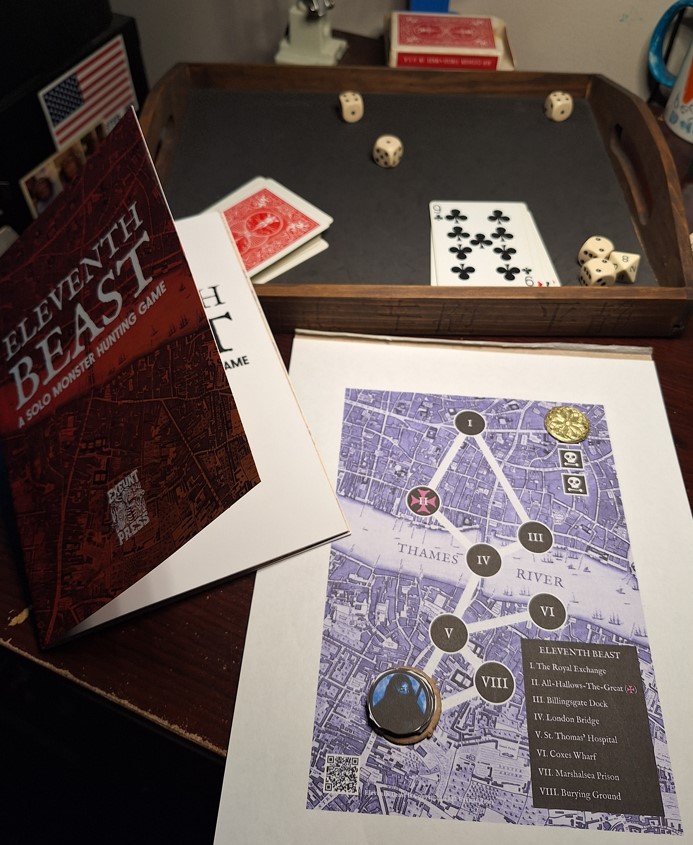
At a recent board game day in my local community I picked up a single player game. I wasn’t sure what to expect, but I figured I’d take a shot. The creator seemed like a local person and the game looked well put together. The game is called Eleventh Beast. This game is set up as a solo monster hunting game set in London in the mid 1700s. I’d only ever “played” pick your own path style single player games, so I wanted to do this one right.

I grabbed the printable map and tokens from the website. I cut out the tokens, grabbed the required dice and a deck of cards with the jokers taken out. I dug up some mood music to accompany my solo game. Note paper at hand, I cracked open the pamphlet and started in on the rules. I also felt some extra ‘flavor’ was in order so I put on some music as a background. I recommend the soundtrack to the old movie “Gothic” if you can come up with it. Really felt like it fit with the game – and ends with a tune declaring that the devil is an Englishman.

The rules made sense, but there wasn’t any… cushion for first timers I guess is a way to say it. I had to just start and figure it out (play fast, make mistakes – a common refrain among our friends). Having said that, it didn’t take long to figure it out. There are only 15ish pages to the whole thing and it’s pretty straightforward once you get started. Rolling dice, placing tokens and pulling cards I worked my way through my first game. I won by defeating the monster with only one wound on my tab.

It is a neat concept. Random card pulling and dice rolls give the action a little bit of unpredictability. It was easy. I’m afraid that I did something wrong as it seemed both shorter and easier than it was described. Part of that might be my lack of detail in the notes department. I could see where the flavor would really work for somebody who wanted to invest in it, but once I figured out what I needed for each step, my notes became a short hand code. It has a level of replay ability, but now that I know what I’m doing it would be a quick hit whenever I wanted to play a solo game. If there were a rule I would change or add, I think it would be a randomization factor for the monster and the player tokens after an attack is resolved. Basically once I’d collected a handful of rumors that turned out to be true (and therefore tools) I stood on the monster and duked it out until I rolled to win. I think pushing the monster and the hunter to random spaces would add to the challenge and allow for a little more strategy.

It was a fun diversion and I’m really glad I took the chance and picked it up. It’s on the shelf, ready to go (with far less prep) for the next time I feel like a solo game.

Being a bad guy without being a “Bad Guy”

“You can be a bad guy without being a Bad Guy” – Zangief.

Explore the complexities and challenges of embodying morally ambiguous personas in role-playing games. Learn strategies to develop nuanced and compelling antihero characters, delve into the psychology behind their motivations, and navigate the delicate balance between immersion and maintaining a healthy gaming environment.

I had a little bit of anxiety heading into this panel. It was one that could have gone very wrong. I was asked/volunteered to be the moderator for this one. I started off with a bunch of notes and lots to say – but shifted to make sure I had a series of questions for the panelists to really dig into. I did lead into things by stating in my introduction that I had deep feelings about this topic that lead all the way back to the 1982 movie starring Tom Hanks as Robbie, the troubled college student in “Mazes and Monsters” (and I still think it’s unforgivable).

Here are the questions I came up with:

What are some techniques you have for creating the safe gaming environment you want?

Once you have the group / environment you want, do you set limits on what your characters can and can’t do? Follow up – how are we defining ‘bad guy’?

What are some strategies or approaches you can take as a player to be the anti-hero / bad guy without wrecking the game for everyone else?

As a game master, what tactics can you use to create compelling drama without letting the game play get out of hand?

What are your favorite aspects of playing out the ‘bad guy’ ~ and how do you do that while keeping in mind all those questions we just covered?

What are some strategies for taking steps back or making a move to help somebody in your group who is struggling?

I also wanted to include my notes here – before I was in charge of the discussion, here’s what I wanted to keep in mind:

One of the most enjoyable aspects of role-playing is exactly that – it’s a role. It’s not really YOU, right?

Creating a character that wants something is a part of this. Motivation, desires, needs… how do those make this character act? Is it the choice you’d make in the real world? Maybe not.

Give your characters secrets. What would they do to protect those secrets? Is honor vs. embarrassment a driving factor for your street samurai?

Consequences are NOT your consequences, but just because it’s not the real world doesn’t mean they don’t exist or won’t effect you.

Don’t become “that guy” or “that girl”. Yes, your character might be a bit homicidal. Deciding you’re in a bad mood so you’re going to kill all the other player characters is a group stopper. Don’t wreck it for everyone else. OR consider making your ‘bad guy’ character have a specific arc. Talk it out with the game master. A spectacular, massive, explody death is really memorable for the other characters and can push a story along. Yes, you need to make a new character, but that can be OK too.

Reasonable example: I played an anti-paladin. He was a cold hearted killer and had 0 remorse about it at all. He was being guided by a deeply evil wizard… who lied about being a ‘good guy’. We had to team up with 2 ‘good guy’ characters and a true neutral wizard to save the world (balance and all that). The group had a little bit of infighting based on goals, but it made for great tension and a spectacularly messy death for my character in the end.

Unreasonable example: I ran a big one shot session for a friend’s birthday. Co-DM with my friend John. Ten players – two teams of 5, each trying to claim the birthday throne. It was designed to be a battle royale. What happened was one player picked out another and just hounded her. Singled her out and didn’t let her do anything else except constantly defend or deal with being taken out of the action with any of the others. I found out after the fact that made the attacked person cry and now she’s not interested in playing anymore. Don’t be that jerk.

Coming Out of the Dungeon

From classic dungeon crawls to slice of life storytelling, role-playing games have evolved and mutated in the fifty years since their conception. Many vintage games and titles are still played, though their presentation and execution may differ from the original intent. How are modern players clashing with old-style expectations, and how can you blend nostalgic charm seamlessly into your current games?

This was one panel that I totally misunderstood before the convention. I had a handful of notes about games that were NOT old school D&D, but that was not the direction of the panel at all.

How do we deal with all the history various games have now? Is there a way to bring some of those things forward to use in a modern game?

This is a panel that I wish was recorded. It was a nuanced and interesting discussion with players from various backgrounds. That is always the danger when talking about older versions of games – there was a distinct lack of diversity. There are any number of old adventures, adventure settings and interactions that would be considered “problematic” by a lot of folks today.

Can some aspects of those games and adventures be updated? Certainly. There are examples of many classics being updated to the latest game systems and being republished. Are there some that likely won’t make the cut? Absolutely. Dark Sun was a prominent one in the discussion as a significant portion of that setting revolved around slavery. There was a small mention of the 1st edition module series “Aerie of the Slavelords” and A2 “Secret of the Slavers Stockade” in particular. Those have some very specific issues. Could they be mined for ideas and maps? Maybe – but you’d very much have to have clear boundaries and discussions with your players as to how they feel about topics like that and if they are suitable for game play.

A good topic, a great discussion and one I hope to revisit – at the very least so I can take better notes.

So you want to be a Game Master?

First time Gamemastering? Are prospective players asking whether you run your table Rules as Written or Rule of Cool, but you don’t know how to answer? Are you new to TTRPGs and want to get your friends to join you at the table? Have you wanted to give your Forever GM friend a break? Come to “So you want to be a Game Master?”, where our panel of experienced game runners will teach you how to lead an RPG, and ensure the fun is spread evenly around the table.

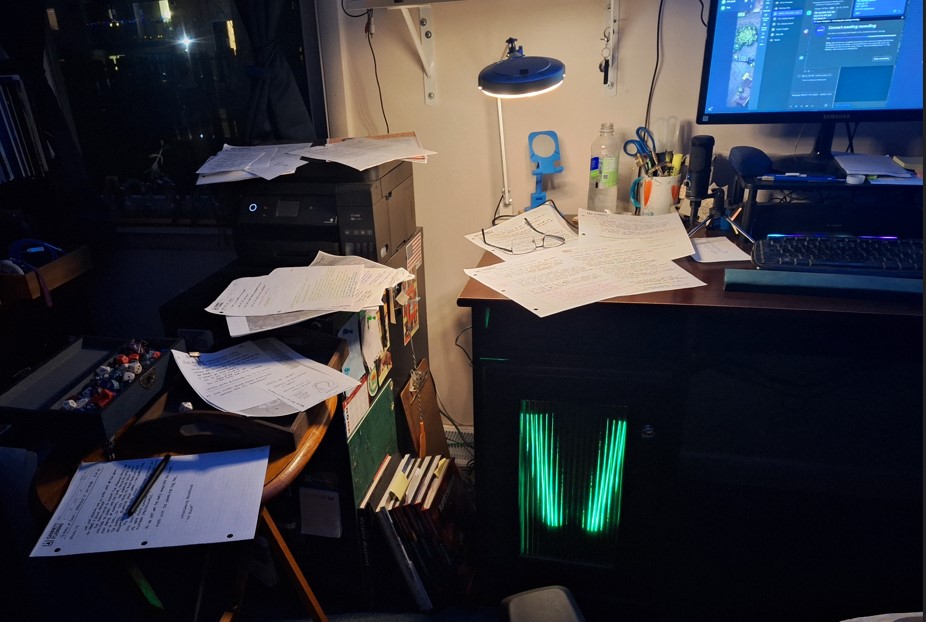
The home set up.

I’ve done posts and videos about being a DM before. I’ve also run a workshop at Balticon in the past for first timers. I like the idea of empowering others to invest in creating something wonderful and fun for everyone. For the record, I am very much a ‘rule of cool’ kind of game master. Here are my notes for this panel:

My personal house Rule #1: It’s just a game.

We’re here to have fun, and if we’re not having fun, then why are we doing it?

Finding an RPG you like is partially about the game itself and partially about the people you’re playing with. Both parts matter. These games are by their very nature social. The single biggest challenge is finding a group, or a series of groups of people that you really, truly enjoy gaming with. The people are the key to it all.

As for the games themselves, part of that is learning what your group is into, and what you are all looking for in a game.

How many people do you want the game to handle?

You don’t have to be an expert on fantasy lore or a master rules lawyer; anyone can be a GM.

The hardest part of it all, battling the demons of three to five other people’s schedules.

Find inspiration (in art, in books, in movies, in conversation with others)

Prepare to the amount you feel comfortable with – SET A SCENARIO, NOT A STORY PLOT

Roll with choices your players make – be flexible

Adapt encounters that were ‘missed’ into something else later in the campaign (save your work)

Keep a list of names (like sounding names from a similar area – on hand just in case random NPC)

Keep notes – particularly of who all those random NPCs are, b/c they might stick and come back (Cabbage guy from Avatar the Last Airbender anyone?)

Feel free to watch shows like critical role – but understand what they’ve got going on behind the scenes (and if you don’t have that, how can your game match that?)

Even the best, luckiest and most talented groups don’t last forever, and sometimes that’s what makes them truly magical. Take advantage of having fun while you can.

What Makes a Good Player?

The description for this panel:

Countless tales are told of the legendary “That Guy,” the fiend who destroys the good times of tabletops everywhere. But little is said about the others, the celestial beings who remember names, piece together plot points, and work with their GM on narrative and theme. This panel of GMs and Players will tell stories of the best player moments, and elucidate what makes these angels so special.

I’ve been playing various role playing games for a very long time. I’ve played a lot, and over the most recent years I’ve been the game master more often than not. Running a game and staying ahead of a group of creative, talented and smart people is a fantastic challenge. Here are the notes I had for this panel.

Chemistry.

We play these games because we want to have fun. It’s definitely no fun if the person sitting next to you is the verbal equivalent of a pebble in your shoe while you walk.

Finding your people is NOT easy. It IS a role-playing game, so you will have to get past the anxiety part in order to make it work… unless that’s your whole party and the game adventure becomes who’s actually going to be forced to speak to the service person you’re facing…

Flexibility.

You’re here to have fun, right? Sometimes that means getting outside your comfort zone and pretending to do a thing you would NEVER do in real life, for whatever reason. Sometimes you need to change a little to allow others to do the same.

No Judgment.

This one is a balancing act. It ties in with the chemistry thing. What if your rogue character does something that you, on a deeply personal level, find abhorrent? Is it just the game? Is it how the character would actually behave because reasons? You can’t leap on the judgmental band waggon or it will kill certain creative parts of the game.

Pay attention.

Sounds dumb, matters a lot. When in person games were more common than virtual there was always that one person that was on their phone or who fell asleep on the couch. It can hurt the flow of any session if we all have to stop, back up five minutes to tell you what you weren’t paying attention to and then wait for you to re-read your spell list to figure out what you were doing.

Be creative.

Not everyone is a mastermind with 56 plot lines weaving in and out of their minds, but do any little bit you can. Take on something small if you feel like you don’t know where to start. Look at your character and create from there. What do you really know about? Slide some of that into your character, and use that as a starting point. If you’re a hair stylist, allow your character to wear a hair style that you’d love to see, then leap off from there and make it a quirky part of that character – the character constantly tries to get others to color their hair or braid their beard or something. Those little bits of flavor make a very rich game.

Be understanding.

Sometimes gamers need to take a knee. The real world intrudes. This ties together with chemistry and flexibility. My best games have come after we’ve had to skip a week because of family stuff or during really tough real world issues for my players.

Favorite things from my players? I had a OCD person with a color coded notebook. She wrote everything down. I have a great note taker in my campaign now. She takes the greedy character to a whole new level, so she tracks all the party wealth.
New players rock because they don’t have tropes to rely on. They do something weird every time!

Caught up

I’m still banging away on the YouTube channel. It was never my intention to do this, but now I’m kind of invested in the whole process. I’ve finally caught up with the backlog of videos. I’m up to the most current game play video.

I’m also starting into an area of the story where more and more is being revealed – more of the story that has never seen the light of day. I’m excited for it.

This last episode felt a little slow to me, but I’m sure it is the calm before the storm. Head on over to the channel and check it out: